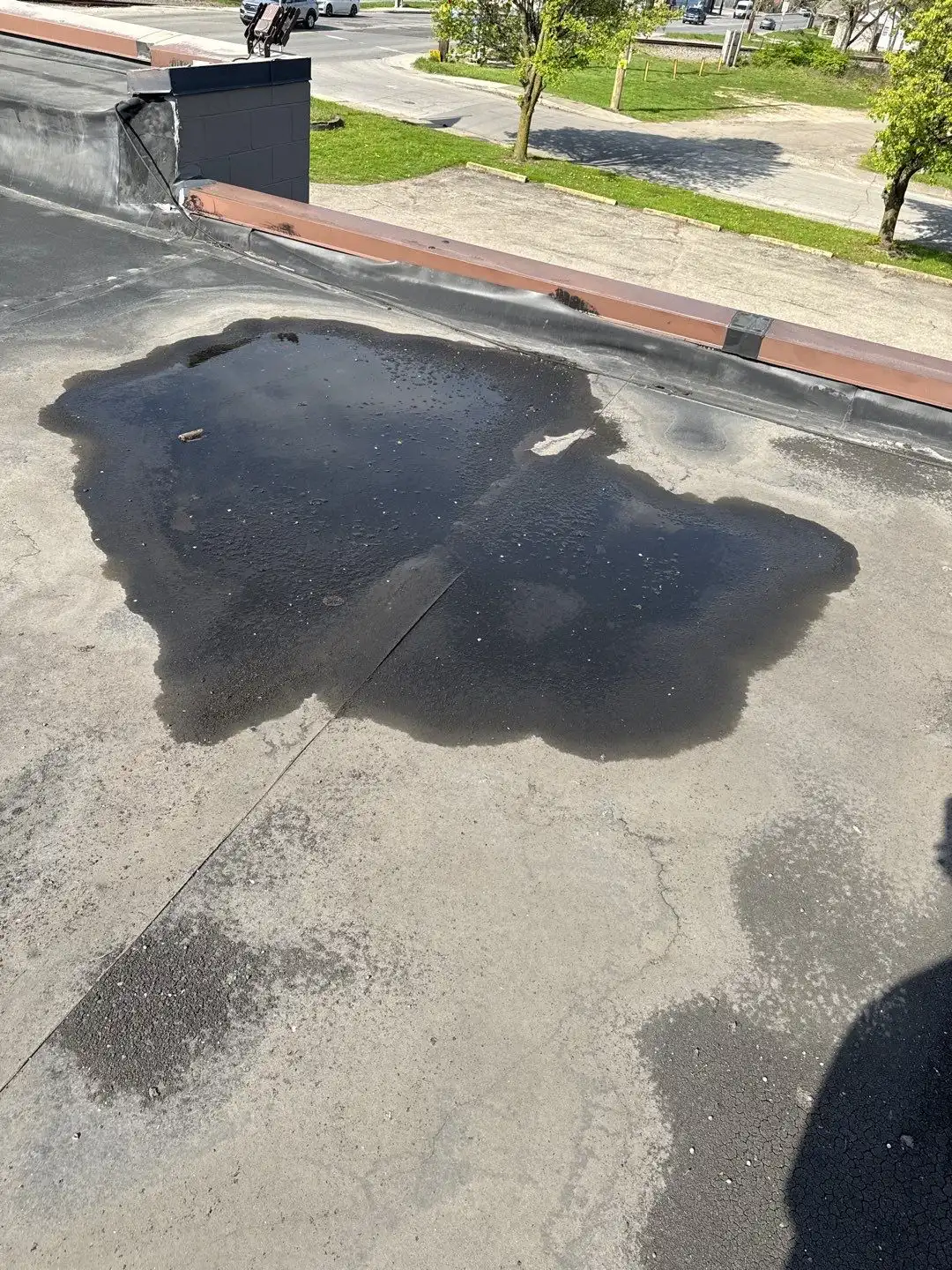
Job 1: EPDM single ply, west side warehouse
Owner called about brown rings on drop ceiling tiles in a back office. He assumed the leak was directly above. It almost never is on a flat roof. We walked the membrane and found three suspects within thirty feet: a pitch pan around a conduit penetration that had shrunk away from the pipe, a seam that had fish mouthed near a drain, and a popped fastener under a small bubble in the field.
Infrared after sunset showed wet insulation tracking from the pitch pan, not the seam. The seam was cosmetic. We cut a test square, confirmed saturated polyiso, and mapped the wet footprint with a moisture meter. The fix was a cut out and replacement of two insulation boards, a new target patch with primer and seam tape, and a fresh pourable sealer pocket. Total visit was under a day. The fish mouth seam went on the punch list for spring, not because it was leaking but because it would within a year. That kind of honest sequencing is what we talk through during a commercial roof inspection so owners are not surprised by a second call.
One detail worth recording from this job: the pitch pan had been topped off twice by a previous contractor with the wrong sealant, a urethane caulk that skinned but never insured to the EPDM. That mismatch is common on warehouses where in house maintenance teams grab whatever tube is on the shelf. Speedway Commercial Roofing crews carry pourable sealer and primer matched to the membrane chemistry, and we note the membrane type on every work order so the next visit does not repeat the mistake.
Job 2: Modified bitumen, downtown Speedway mixed use
Tenant on the top floor reported water down an interior brick wall during a hard rain. No drip on calm days. That pattern almost always points at a parapet or coping, not the field. Sure enough, the coping cap had open joints and the through wall counterflashing had pulled loose where a sign anchor was installed years ago by someone else.
We test flooded the parapet base with the field dry and reproduced the leak in about twelve minutes. Repair was new termination bar, fresh sealant in a reglet, and a coping joint detail with butyl tape and a cover plate. We also documented two anchor penetrations the sign installer left behind. The owner used those photos for a chargeback conversation. For readers tracking the wall side of these stories, our notes on wind driven rain at wall openings cover the same intrusion logic from the interior side.
Job 4: Mystery leak above a kitchen exhaust
Restaurant manager called about grease tinted water dripping onto a prep table. Everyone assumed the hood curb was the source. It was not. The curb flashing was tight. The actual breach was a hairline split in the membrane about eight feet uphill, where a service tech had dragged a ladder across the roof during a hood cleaning. Water entered the split, ran along a seam, and emerged at the curb because that was the next low point in the insulation layer.
We patched the split, added a walkway pad along the route service crews actually use, and gave the manager a one page roof access protocol to share with vendors. Since then, no callbacks. Most flat roof damage in Speedway is not weather. It is foot traffic, dropped tools, and the wrong sealant in the wrong place. Severity gets assessed over the phone when an owner calls, and if water is actively coming in we prioritize tarping and dry in before scheduling the full repair visit.
Quick field checklist before you call
- Photograph the interior stain, then the roof area roughly above it (not directly, the whole zone)
- Note whether the leak shows in steady rain, wind driven rain, or only after snow melt
- Check the nearest roof drain for debris and standing water depth
- Look for recent HVAC, electrical, or sign work that added penetrations
- Walk the parapet inside and out for cracked sealant or loose coping
- Pull any wet ceiling tiles so the cavity can start drying while repair is scheduled
- Write down the membrane type if you know it, so Speedway Commercial Roofing can bring matched primer and sealer to the first visit
Job 3: TPO with chronic ponding
Strip mall with a five year old TPO roof, two low spots holding water for days after every rain. Membrane was intact, seams were clean, but the ponding had stained the surface and the manufacturer warranty language was getting nervous. The owner wanted a quote to "just fix the leak." There was no active leak yet. The honest call was tapered insulation crickets to redirect water toward the drains, not a patch.
We walked him through two paths: spot taper work now for a moderate cost, or wait until a real leak forced an emergency response and risk wet insulation across a much larger area. He picked the proactive route. That is the kind of decision flat roof owners face constantly, and it is why our commercial roof repair estimates separate "needs now" from "plan for next budget cycle."
Patterns worth writing down
A few things show up often enough that they belong in any flat roof field journal. Ceiling stains rarely sit under the actual breach. HVAC service trips create more leaks than weather does, especially around curb flashings and gas line supports. Drains that look fine from above are often clogged six inches down by gravel or a tennis ball. And membrane that looks chalky and brittle at the edges is telling you the field has three to five years left, not ten, no matter how the middle looks.
Two more I keep coming back to. Snow melt leaks behave nothing like rain leaks, because the water sits and finds slow paths through laps that shed a downpour just fine. And any roof with a recent solar install deserves a fresh look at every standoff, because the bracket flashings are only as good as the installer's worst detail. When in doubt, walk the whole roof, not just the area above the stain.